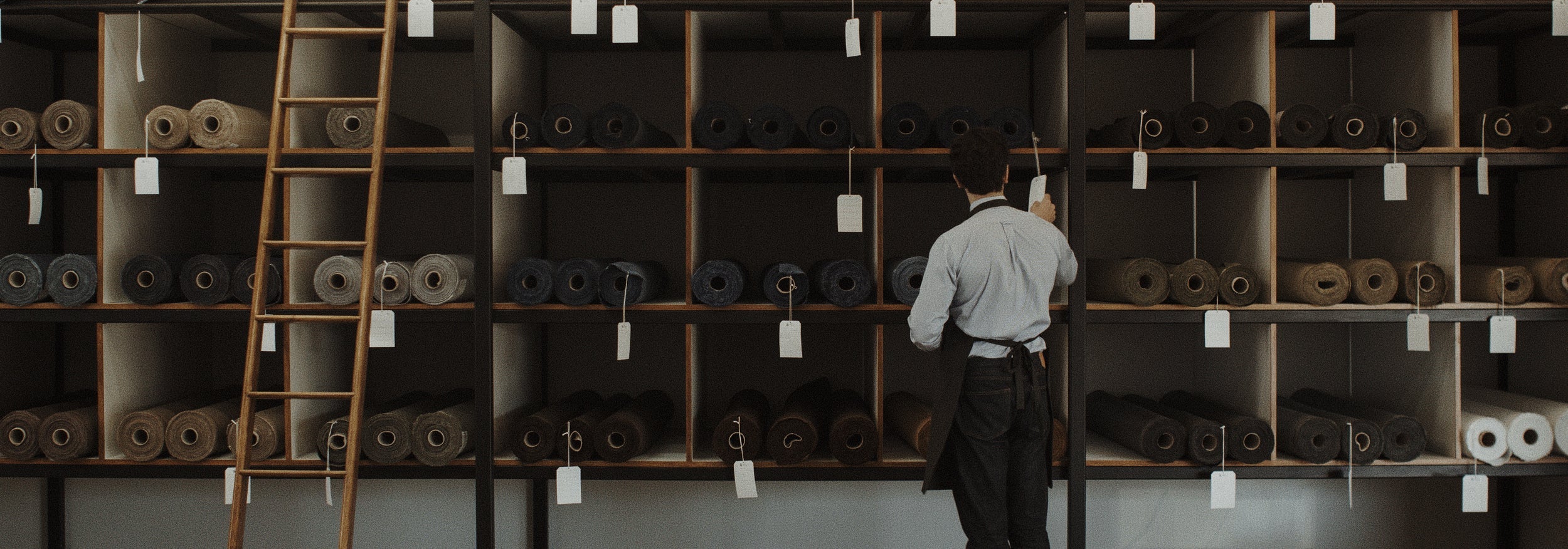
In an industry often defined by heritage and long-established names, Maison Hellard has quietly carved out a distinct space of its own. Founded by Nathan Hellard, the house approaches fabric with a deeply personal perspective, one rooted not in tradition alone, but in instinct, collaboration, and a considered vision of what linen can be.
Drawing on French raw materials, traditional know-how from Normandy, and an aesthetic that sits somewhere between British structure and Italian expressiveness, Hellard’s work resists easy categorisation. Instead, it reflects a slower, more deliberate approach to cloth, one that prioritises hand, colour, and narrative over convention.
We spoke with Nathan Hellard about his unconventional path into textiles, the philosophy behind Maison Hellard, and his ongoing pursuit of fabrics that feel entirely his own.
Trunk Talks: Nathan Hellard, Founder of Maison Hellard
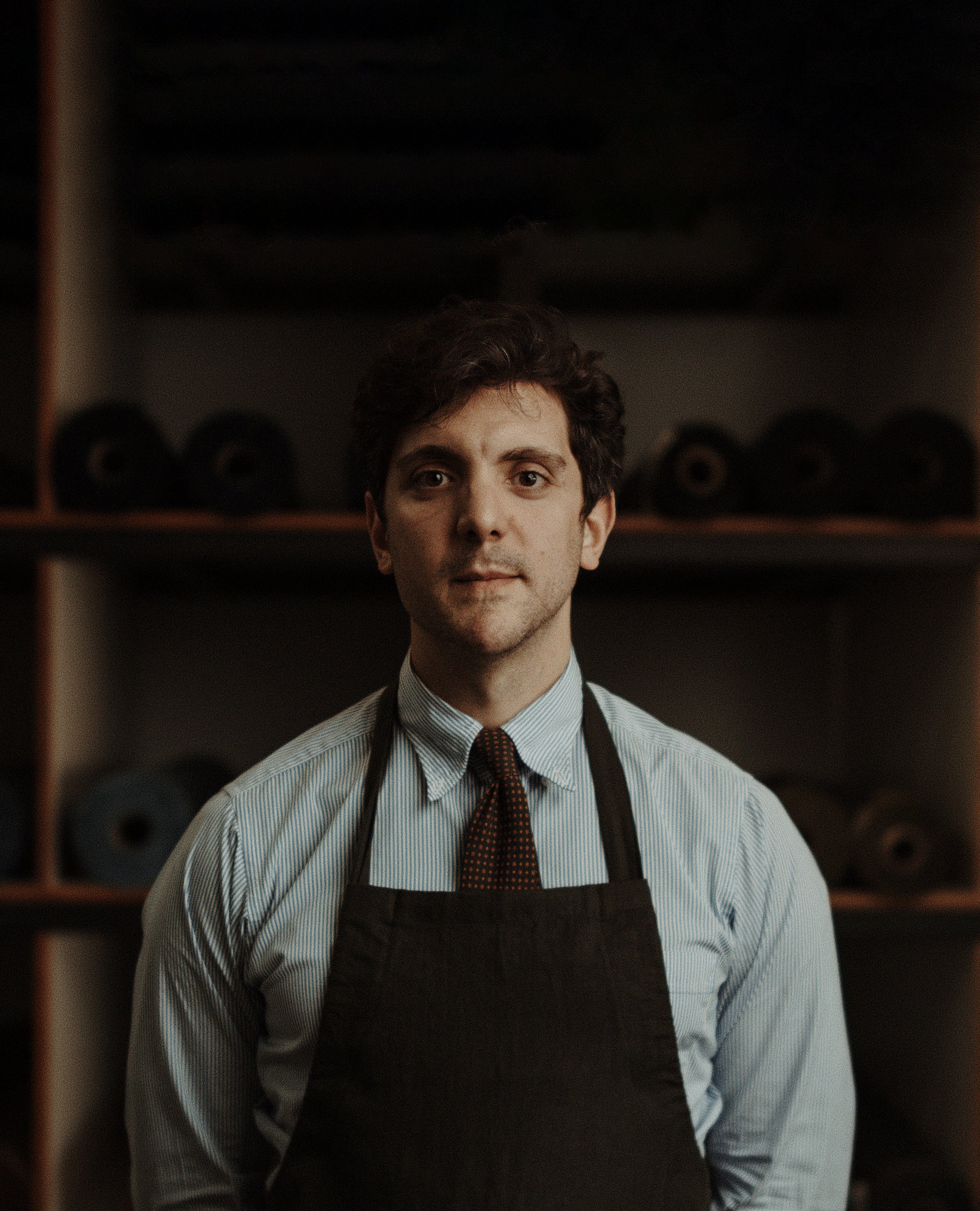
We’d love to start by hearing a bit about you—could you introduce yourself and share some of your background?
My name is Nathan Hellard. I am 35 and the owner of Maison Hellard. I do not come from a textile background and discovered this passion rather late, while I was in the military. I later learned the trade at Ermenegildo Zegna and Scabal before deciding, about five years ago, that it was time to create something more personal.
Maison Hellard has quickly gained a reputation for exceptional fabrics. How did the house get started, and was there a particular moment or opportunity that inspired you to take the leap?
I work closely with my friend and mentor, Martin Aveyard, who now runs Aveyard Design Associates. From the beginning, we agreed on something quite simple: we would make cloths we genuinely liked. I had a fairly clear idea of the hand, the aesthetic, and the colour palette I was after, and, as it turns out, we see things in much the same way.
We started with an initial collection built on bold ideas, expressed in a classic way—traditional designs in staple colours. This was already original for linen. Over time, we introduced limited editions to explore further, and we are now moving towards something much more personal, where each design is tied to an individual and a story.
The starting point was fairly straightforward. At the time, I struggled to find linen that felt truly classic. It was often very summery, quite Riviera in spirit, and I felt there was room for something more considered.
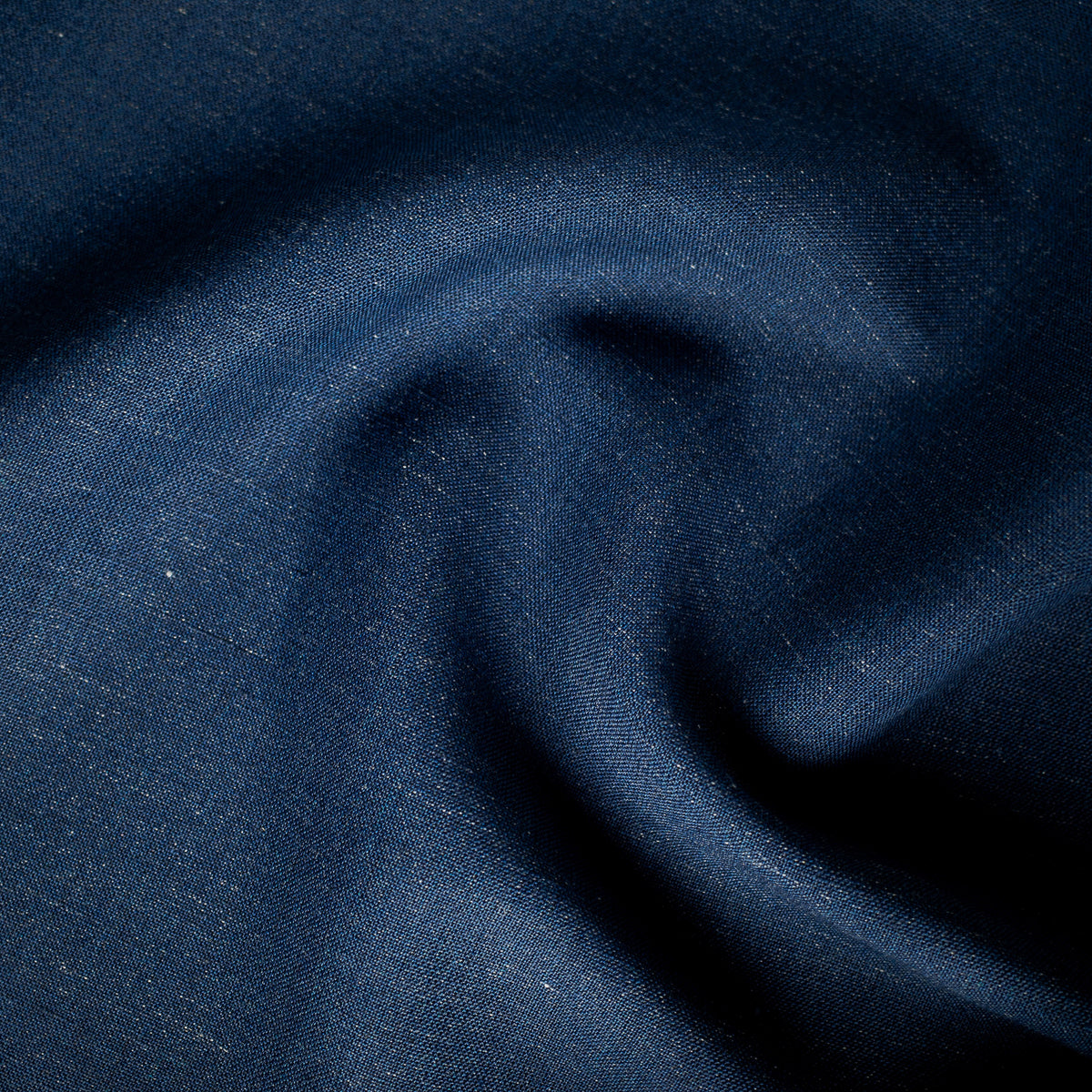
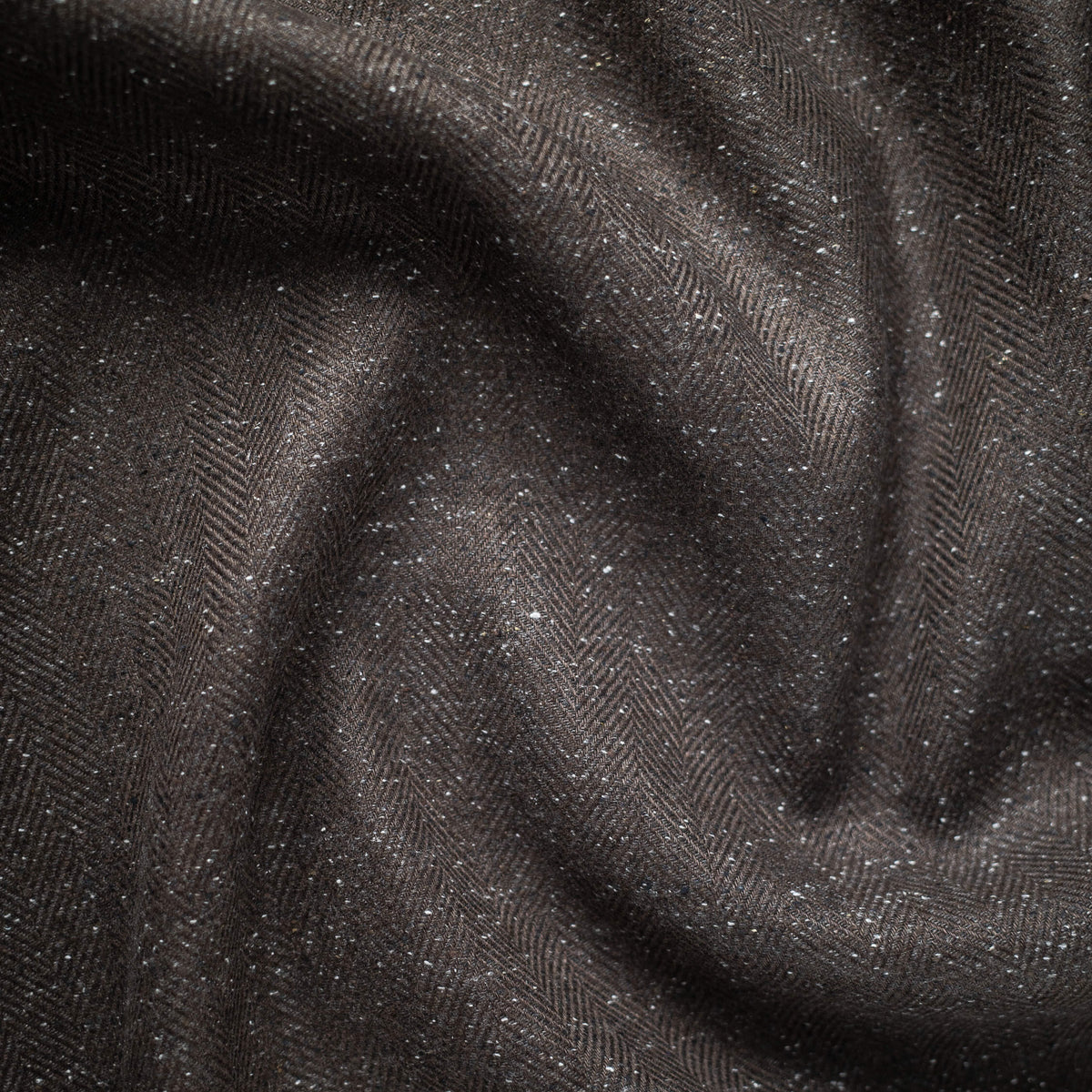
French linen seems central to your work. What does it mean to you to work with a raw material from your homeland, and how does it influence your approach to creating fabrics?
Coming from a military background, I have always felt that loudly promoting origin for marketing purposes can seem a bit superficial. So I do not emphasise quality simply because the linen is French.
What matters to me is traceability and craftsmanship. We work with traditional know-how from Normandy, where families have been working with flax for generations. I come from a rural background myself, so there is something quite important to me in respecting that.
In terms of design, I have often heard sartorialists speak of a clearly defined British aesthetic—quite classic, often tweed-like—and an Italian one, typically more expressive in colour. I wanted to explore something in between, something I would describe as French. It is influenced by cinema, by certain political figures from another era, by a quieter, more understated style—and, of course, by my own background.
Are there any standout fabrics or colours that you’re particularly proud of? Are there techniques or details that you feel give Maison Hellard its unique signature?
We have spent a great deal of time working on the hand—the finish of the fabric—and even more on developing our own yarn-dyed colour card. That process took over a year, with a great deal of back and forth—what we call lab dips. Without that, however much care you put into the details, the result can still feel somewhat generic.
In the end, cloth is simply about yarns crossing, so I wanted that foundation to feel truly our own.
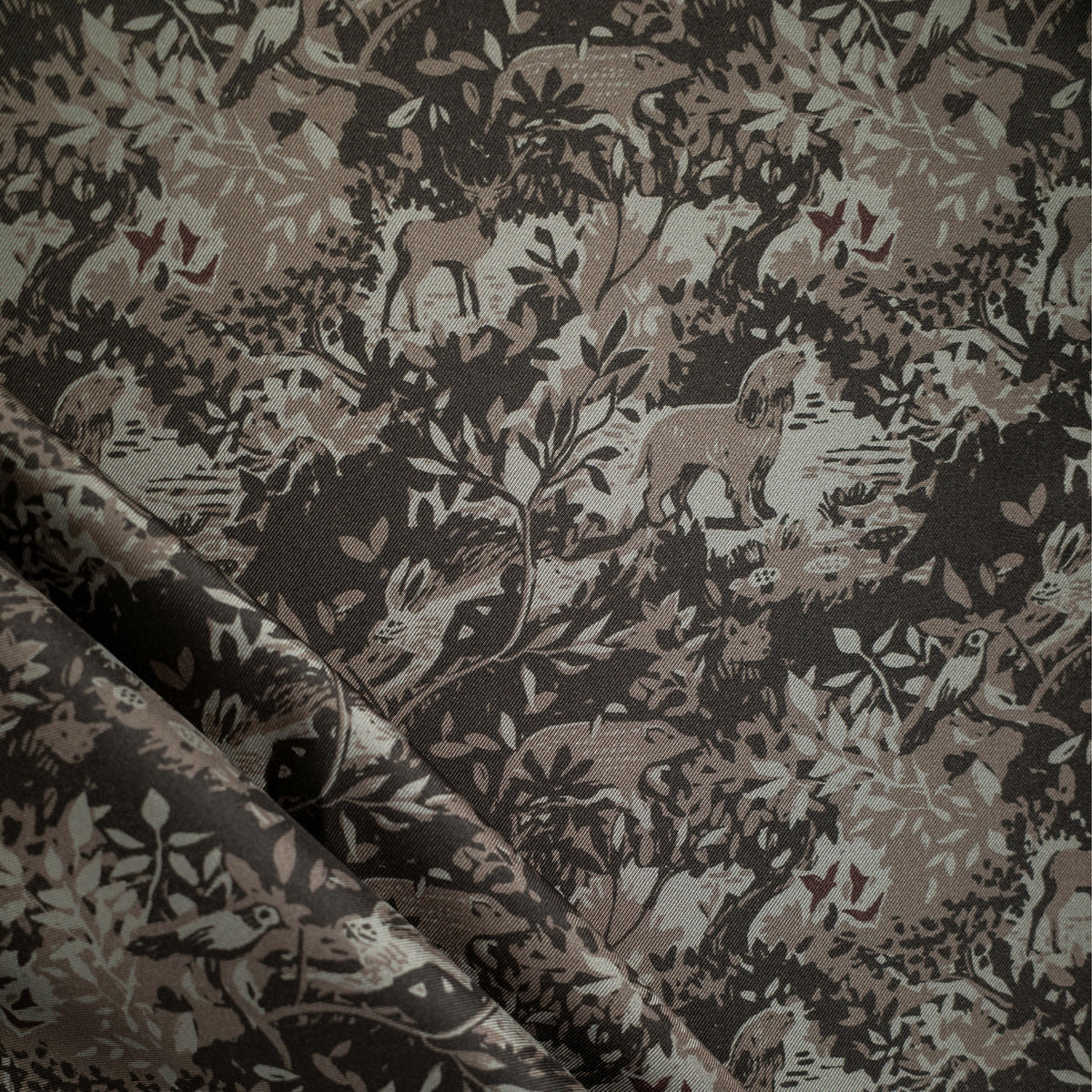
In the next collection, I finally created a cloth for myself called Camouflage, inspired by my background as an officer. I am quite fond of it. I also particularly like the silk lining featuring my dog, Vaillant, illustrated by the artist and friend Bertrand de Miollis. In our Carnet de Voyage collection, these linings act as illustrations, setting the tone for different destinations or chapters.
Launching a new fabric house must come with its challenges, especially in a world dominated by historic names. Have you encountered any difficulties, and do you see any advantages in being the “new kid on the block”?
I try not to think of it in those terms. I have had enough of competition from my time in the army; I much prefer to think in terms of collaboration.
For instance, we have worked with Huddersfield Fine Worsted on linen and fresco, with Carnet on silk linings, and with Molloy & Sons on a linen-and-silk true Donegal.
We are a small, family-run company. I work with my parents, and we create cloths for a relatively small group of enthusiasts, as linen is not for everyone—and I quite like it that way. I simply want to keep developing fabrics that would not exist elsewhere, with or for people I enjoy working with. It is, above all, a passion. I have no real ambition to build something larger, although I would very much like to pass it on one day.
Finally, are there any upcoming releases or projects you’re especially excited about that you can share with us?
Yes—quite a significant one. We are about to release an update of our Carnet de Voyage collection. It takes a slightly unusual approach, revisiting the first version from last year with improved yarns and a more refined hand, while adding more than forty new references.
We are very, very (very) late, but it took time to get both the yarns and the hand exactly right. I will allow myself to keep refining it in the future, as I only plan to propose two or three collections in total.
I believe this collection is rather special. Each cloth has its own story and, more importantly, each pattern is unique. It will not be for everyone, but I hope people will appreciate the time and care that went into it. It has become very personal, and I will be presenting many of these fabrics exclusively during our event in London.
Thank you, Nathan!

Maison Hellard Made to Measure Event at Trunk Clothiers
Date: Friday, May 15th and Saturday, May 16th, 2026
Venue: 8 Chiltern Street, London W1U 7PU
By appointment only: info@trunkclothiers.com